Glass / Carbon Fiber Pellets 3D printing pellets
PelletsPellet · FGF / FDM · Industrial pellet 3D printer

Glass / Carbon Fiber Pellets

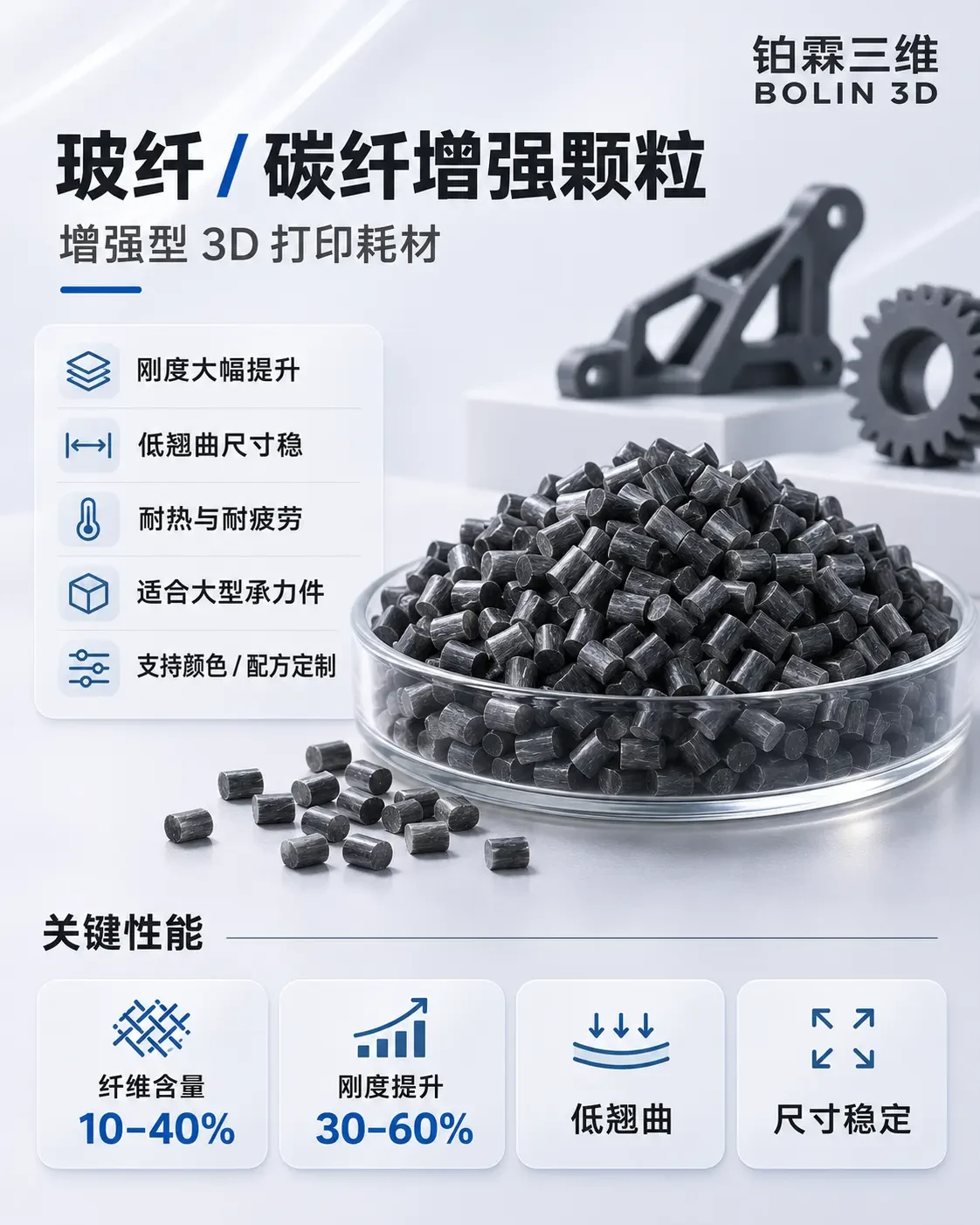
10–40% glass or carbon fiber in ABS, PP, PC or PA bases raises stiffness, strength and dimensional stability for large load-bearing parts and low-warpage molds.

  • Fiber 10–40%
  • Stiffness +30–60%
  • Low warpage
  • Dimensional stability
Extrusion temp.
240–300 ℃
Bed temp.
90–110 ℃

Key features

Much higher stiffness

Carbon fiber lifts stiffness 30–60%, keeping large thin walls from sagging.

Low warpage and stable size

Fiber restrains shrinkage, so meter-scale parts hold dimensions with less rework.

Pellet form is more flexible

Compounds go straight into pellet extrusion, avoiding filamentizing issues at high loadings.

Heat and fatigue resistant

Glass fiber raises strength and heat deflection 20–50% for long-term loading.

Applications

  • Large molds & masters
  • Aerospace
  • Automotive structures
  • Robotics & automation
  • Dimensionally stable parts
  • Recycled material reuse

Factory inspection

Fiber content and dispersion, pellet size and MFR checked per batch; base resin and filler ratio can be tailored with sample verification.

Physical properties

Fiber content
10–40 wt%玻纤 / 碳纤可选
Stiffness gain
30–60%对比未增强基体(CF)
Strength gain
20–50%对比未增强基体(GF)
Density
1.15–1.45 g/cm³随基体与填料变化
Warpage
Much lower大件实机验证
Heat deflection temp.
提升 20–50 ℃ISO 75(0.45MPa)
Matrix options
ABS / PP / PC / PA按需定制配方
Pellet size
2–4 mm增强颗粒专用规格

Recommended process settings

Extrusion temp.
240–300 ℃
Bed temp.
90–110 ℃
Nozzle diameter
≥1.2 mm(硬化钢)
Environment
Heated chamber

Compatible equipment

BOLIN BL10-C direct pellet extrusion: screw extrusion suits filled compounds that would wear out filament feeders. Fiber wears nozzles, so use hardened steel nozzles with a larger diameter.

Figures are typical test values; actual results vary with machine, formulation, process and environment.

Custom color and formulation

Related models

All pellets →
ABS Engineering Pellets 3D printing pellets

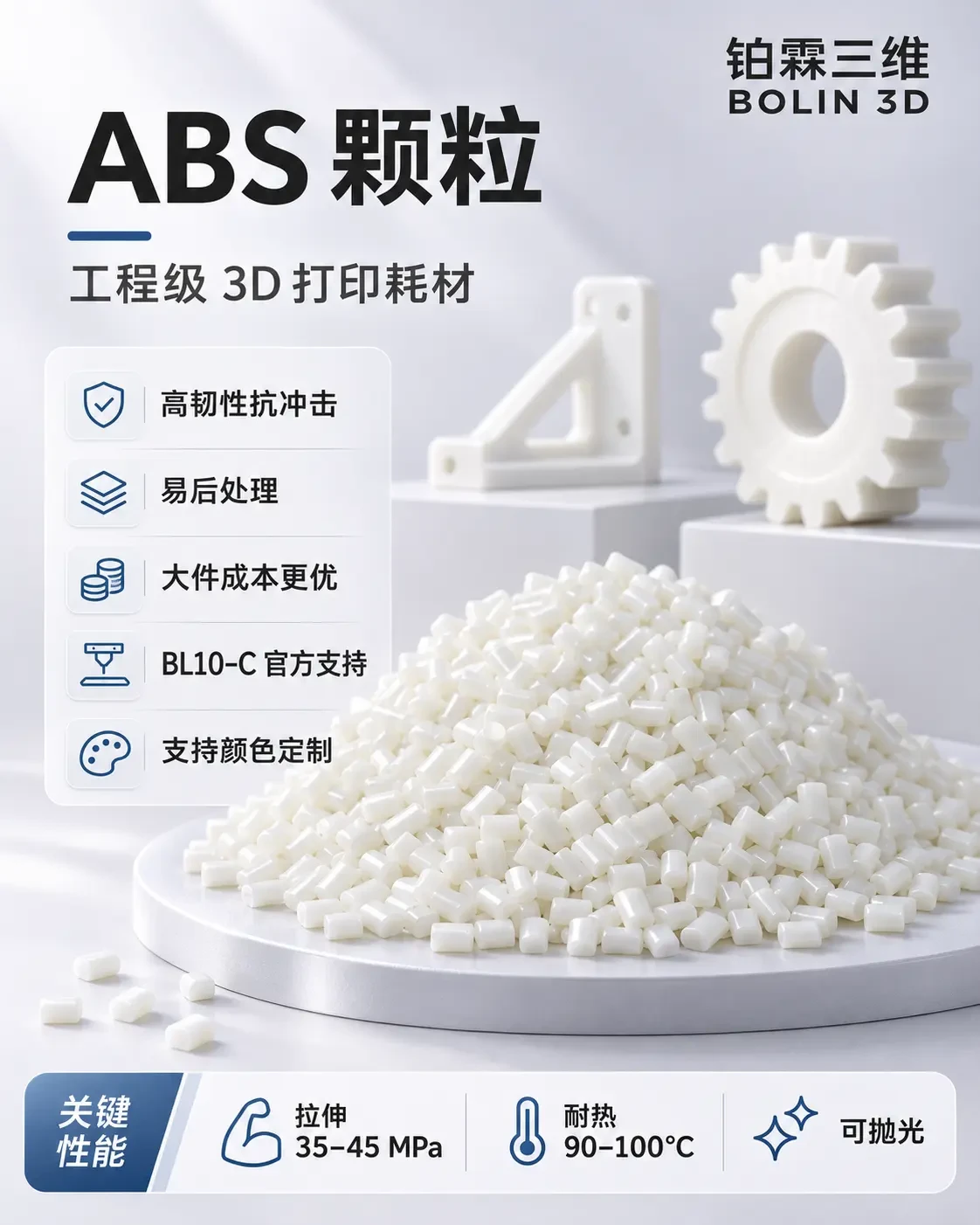
ABS Engineering Pellets

Pellet · FGF / FDM · Industrial pellet 3D printer

  • Tough and impact resistant
  • Lower cost on large parts
  • Officially supported by BL10-C
Density
1.04 g/cm³
Tensile strength
35–45 MPa
Flexural strength
60–70 MPa
PP Polypropylene Pellets 3D printing pellets

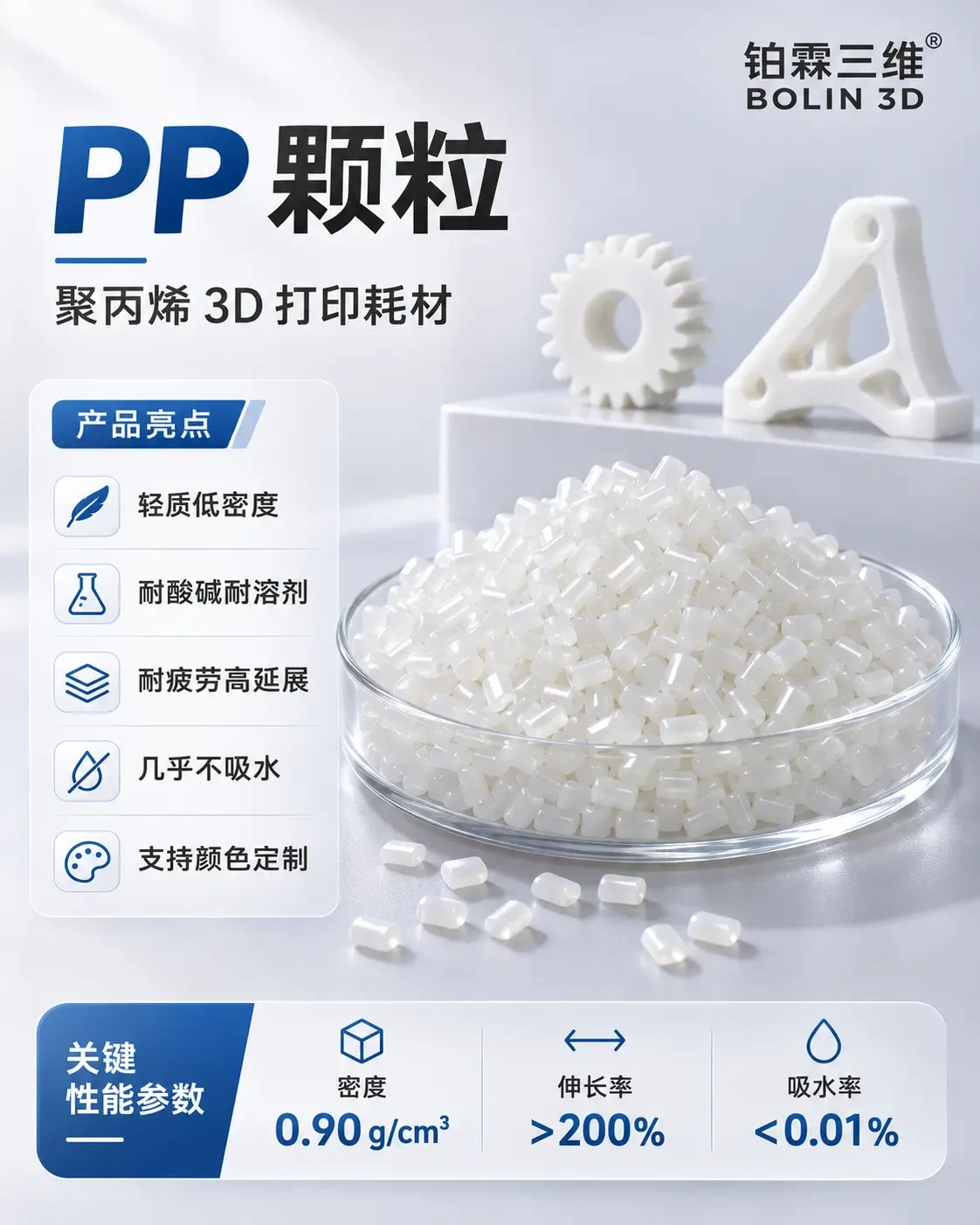
PP Polypropylene Pellets

Pellet · FGF / FDM · Industrial pellet 3D printer

  • Light with low density
  • Resists acid, alkali and solvents
  • Almost no water absorption
Density
0.90 g/cm³
Melting temperature
160–170 ℃
Tensile strength
30–35 MPa
PC Polycarbonate Pellets 3D printing pellets

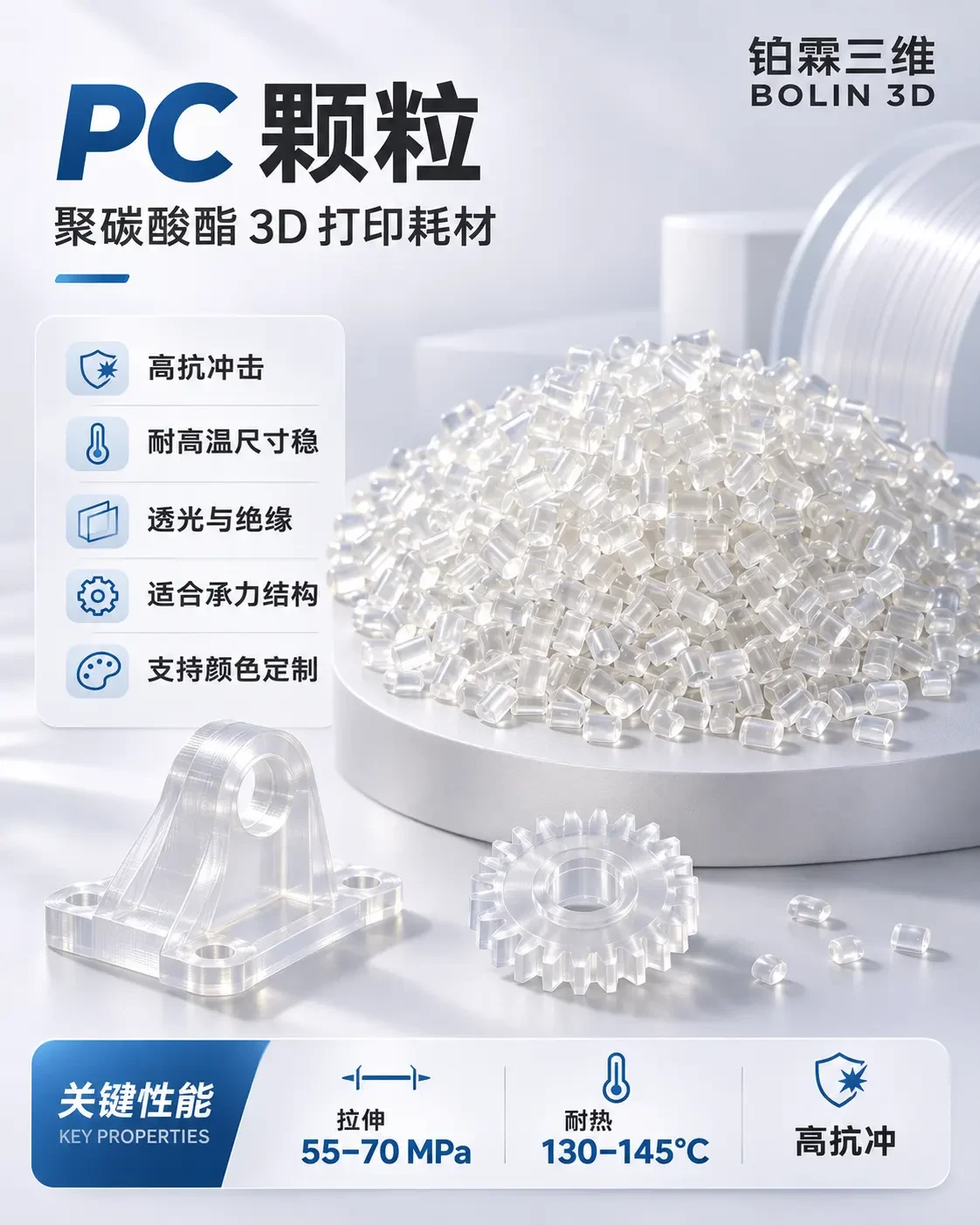
PC Polycarbonate Pellets

Pellet · FGF / FDM · Industrial pellet 3D printer

  • High impact resistance
  • Heat resistant, dimensionally stable
  • Translucent and insulating
Density
1.20 g/cm³
Bulk density
0.63–0.66 g/cm³
Tensile strength
55–70 MPa

Ask about samples and bulk supply

Share part size, material and output needs; our engineers match machine, pellet grade and screw process parameters.

Request a solution

Tell us what you need to build

Used only to reply to this inquiry.

Bolin 3D

BOLIN 3D · SINCE 2008

Industrial 3D printing systems, materials and custom print services for aerospace, medical, automotive, creative and precision manufacturing.

Factory address

Plant 1, Dingxing Intelligent Emergency Equipment Industrial Park, 260 m south of the intersection of Qingliangsi Avenue and Zhenxing Road, Liangyuan District, Shangqiu, Henan, China

Mon–Sat 08:30–18:00, 24/7 technical support

Language & region

© 2026 Henan Bolin 3D Printing Co., Ltd. · All rights reserved

Request a solution
WhatsAppRequest a solution