
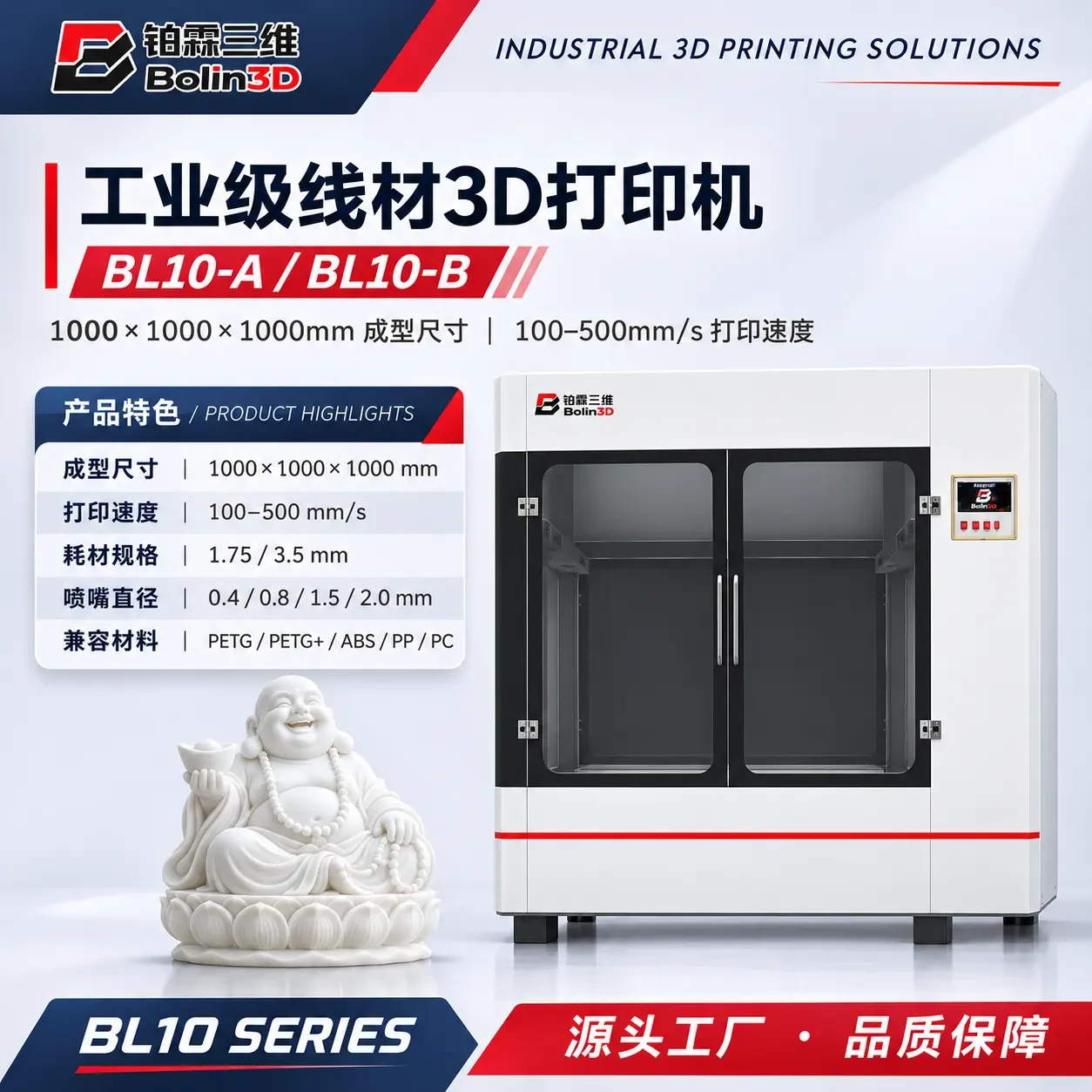
BL10-A / BL10-B
FDMLarge-format extrusion printing: one printer for full-scale prototypes
- Plot Area Size
- 1000×1000×1000 mm
- Print speed
- 100–500 mm/s
BOLIN 3D · SINCE 2008
1000 mm working area, closed enclosure with constant temperature control, and full parameter table. Complete control at every stage: from equipment selection to lifetime support.
Founded
2008
Years of experience in additive technology research, manufacturing, and service support
Credit rating certification
AAA
SSDY2025112439 credit number valid until 2028-11-23
Service Coverage Area
40+
National service network, 24/7 support 24/7
Equipment warranty + lifetime support
1 year
Free repair with no mechanical damage, lifetime technical support
Business Structure
From model selection to equipment startup, material supply, and maintenance: BOLIN 3D unifies the three key stages that impact print quality within a single service system.
Equipment lineup
The BL10 series is designed for printing large, solid parts, while the SLA800 and HF series deliver high detail and superior surface quality. Specifications are presented in a table for easy comparison.
Large-format extrusion printing: one printer for full-scale prototypes
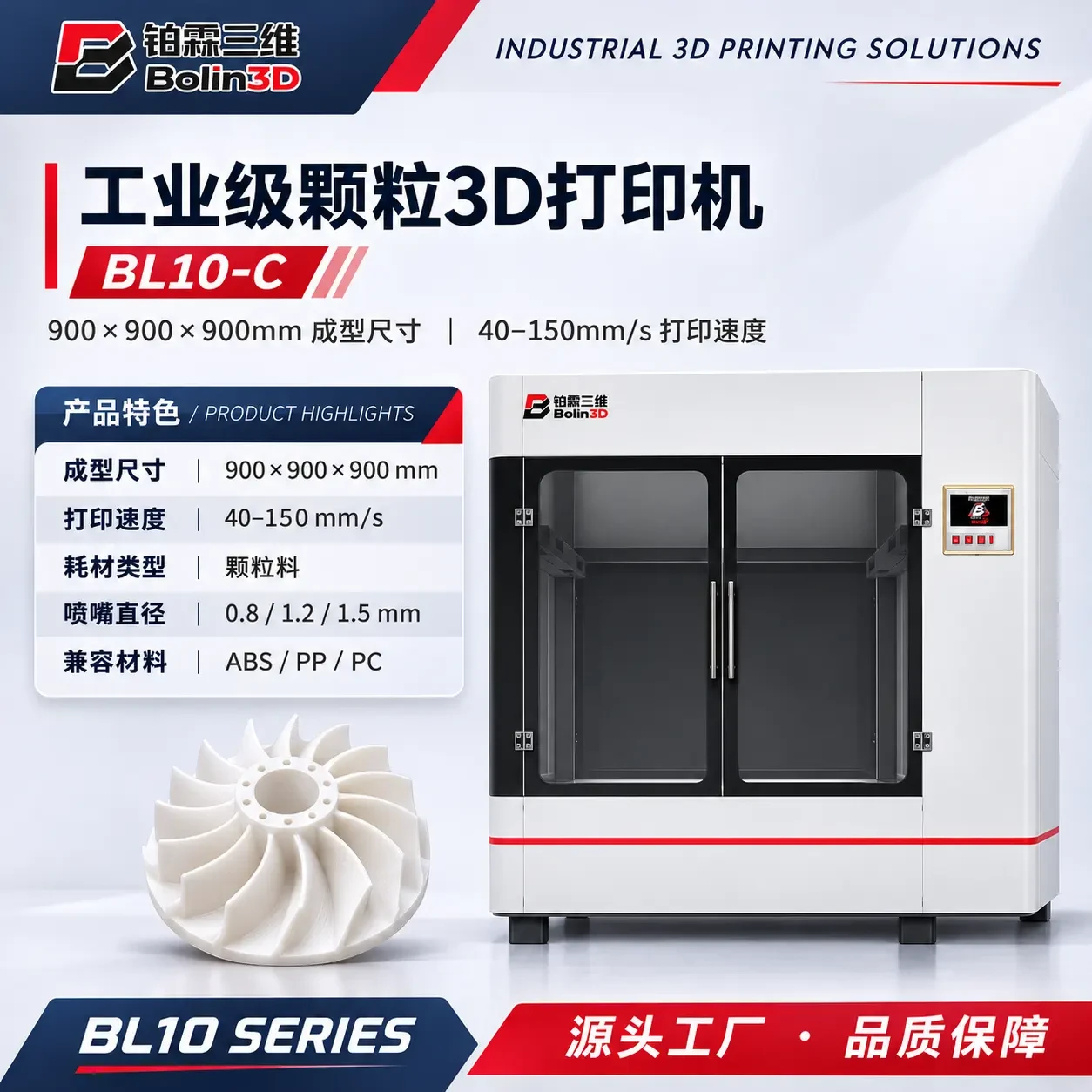
Direct pellet extrusion for continuous serial production
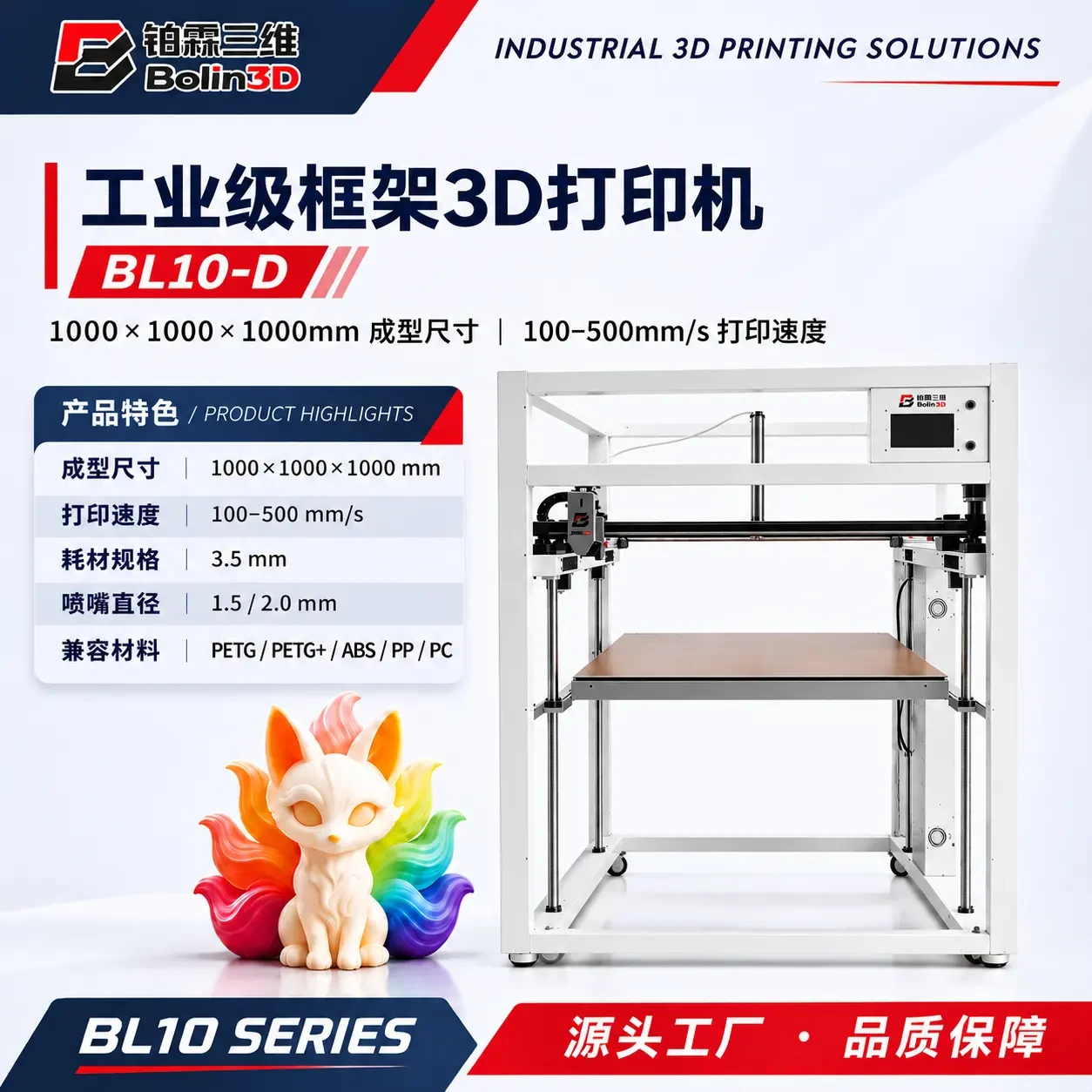
3,5 mm Large-Format Bar Printing — A Reliable Choice for Heavy-Duty Applications
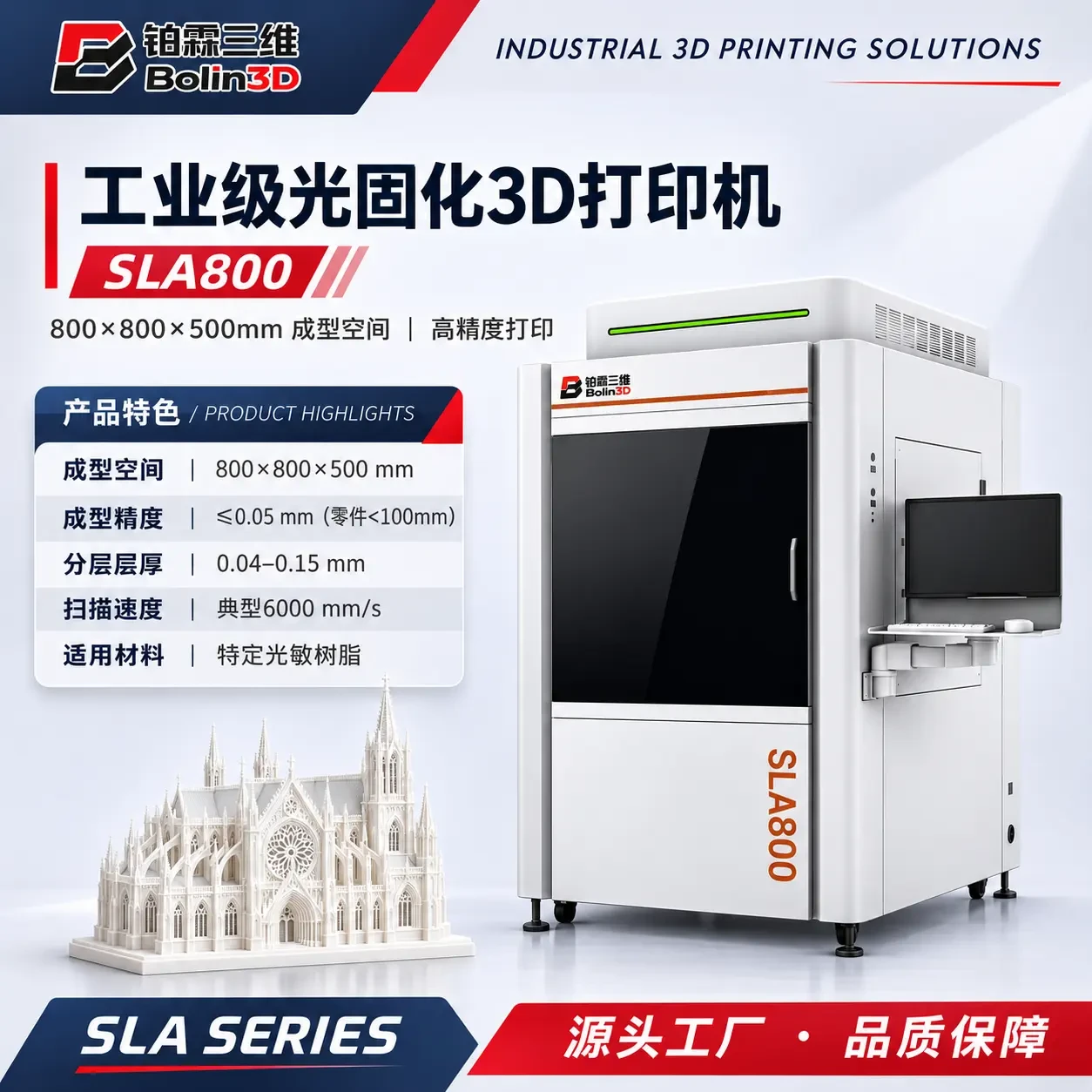
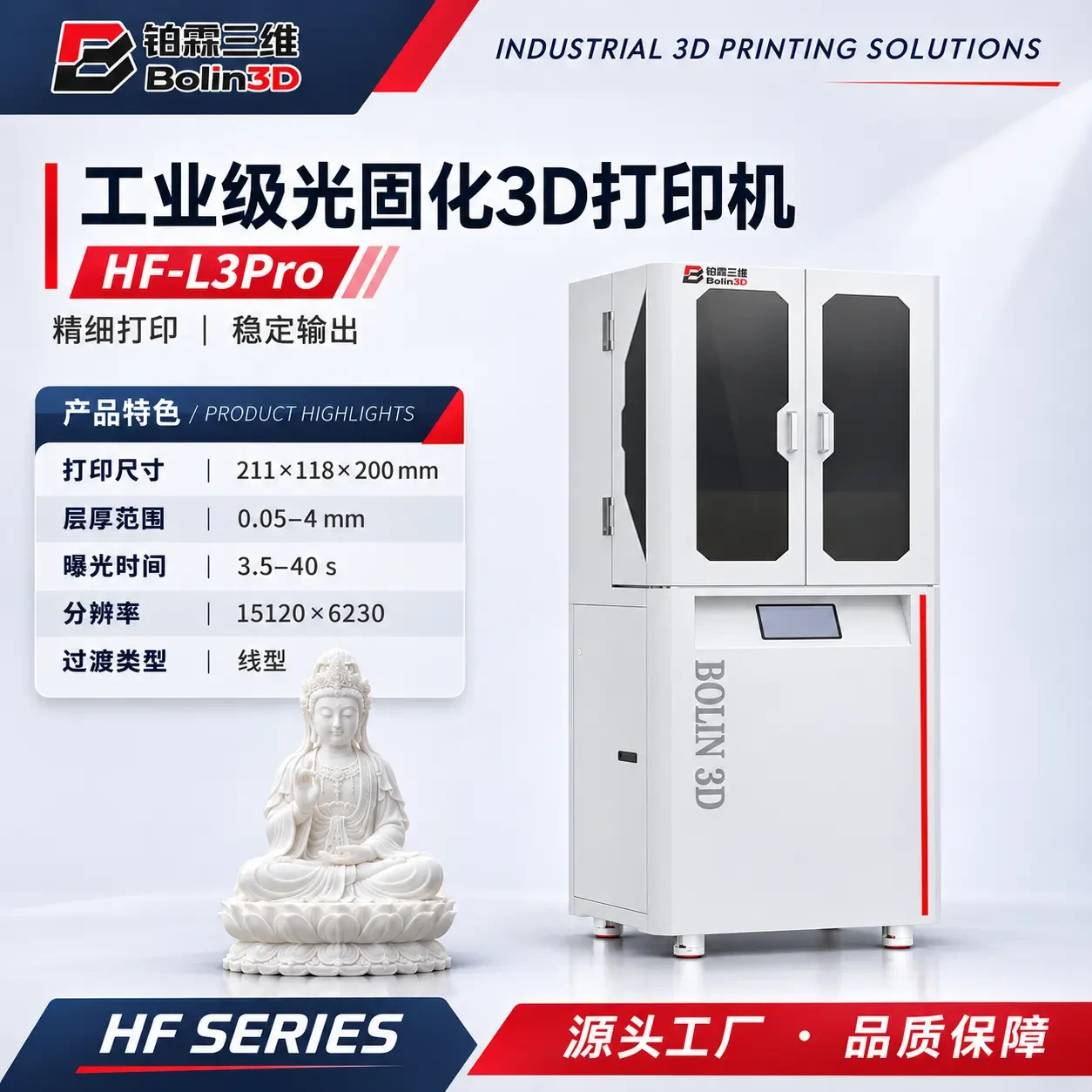
Large-format photopolymerization: high detail and precise dimensions
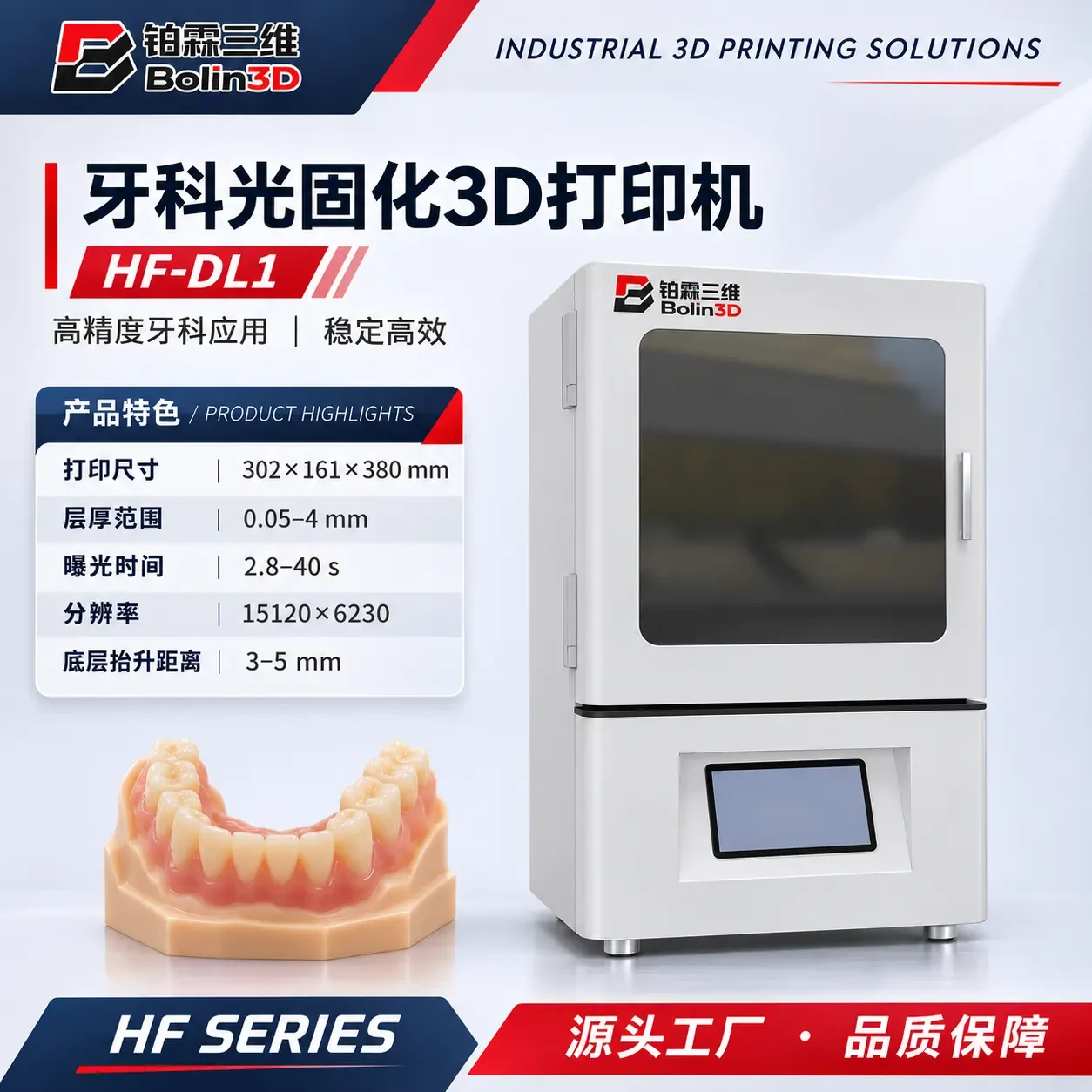
Precise photopolymer printing for dentistry and small parts
Compact, high-precision desktop devices for detailed printing
You can compare up to 3 devices at once for build size, materials, and efficiency.
CompareTechnical Capabilities
The provided data is based on specifications for serial models. Actual results depend on materials, model geometry, and printing parameters. Sample prints are performed before configuration setup.
Maximum build area
1000×1000×1000mm
The BL10 series enables printing of seamless parts, reducing the need for assembly and seam finishing.
Minimum layer thickness
0.04mm
Stereolithography SLA800 for Precision Structures and Master Models
Supported Materials
5+
PETG / PETG+ / ABS / PP / PC and photopolymer resins
Material feed speed
20kg / 24h
BL10-B: Continuous pellet feed, configurable for the production process
Production and Technology
Every unit undergoes assembly, leveling, and continuous print testing at the factory. For each print job, process parameters and quality control records are retained.

Determine part dimensions, materials, tolerances, and delivery schedules to select the process route.
Provide the equipment model, consumable configuration, and post-processing methods to form a feasible solution.
Check the model's wall thickness and orientation, then adjust supports, layer height, and temperature profile.
Stable extrusion thanks to a thermally stabilized chamber and closed-loop control system. Supports print resumption after power outage.
Support removal, sanding, assembly, and surface finishing; technology selection based on application.
Recheck dimensions and appearance, package, ship, and record process data.
Industry Applications
Five common scenarios require different models, materials, and post-processing methods. First, identify your scenario, then review the parameters for better efficiency.
Technical Support
Installation, training, software setup, supply of consumables, and regular maintenance are all handled by a single engineering team, eliminating the need to coordinate with multiple contacts.
Equipment and technology recommendations based on print size, materials, and performance requirements.
On-site installation and commissioning, operation and maintenance training, plus ongoing remote and on-site support.
Centralized control of slicer settings, equipment status, and print jobs.
Long-term supply of filament, pellets, and resin combined with scheduled maintenance.
1-year equipment warranty with lifetime support; free repairs for non-user-caused damage; technical support available 24/7.
MoreMaterials Center
All documentation needed to make a selection is here: the catalog includes the product lineup and application areas, and parameter tables are provided for each model.
Start a discussion
Engineers will select a model based on print dimensions, materials, and required speed. If needed, sample prints are conducted first to approve the configuration and delivery conditions.


